

(Written by: Andy Raditya Satyatikta & Filbert Nathaniel M)
Some of the most memorable romance films rely not on extensive dialogue but on visual storytelling, subtle gestures, and subtext to convey emotions. These films prove that silence can be just as powerful as words in expressing love, longing, and connection. Here are five examples and the reasons behind their effectiveness.
1. Lost in Translation (2003)
Sutradara: Sofia Coppola
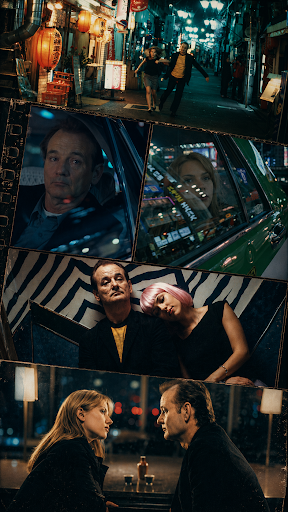
ImagesSources sample cineplaylist : Focus Features
The film relies heavily on unspoken tension and emotional nuance between the characters played by Bill Murray and Scarlett Johansson. Minimal dialogue emphasizes cultural dislocation and emotional intimacy.
The storytelling is gentle and deeply human. Coppola does not force the audience into dramatic twists or heavy explanations. Instead, she lets the emotions grow naturally through silence, small gestures, tired smiles, and late-night conversations. Bob and Charlotte do not simply fall into romance; they find comfort in being understood. Their bond feels special because it is not easy to define. They are not just lovers, not only friends, and not exactly strangers. They are two people who meet at the right emotional moment, when both are quietly searching for meaning. Their relationship becomes a temporary shelter, a soft place where loneliness can breathe without shame.
The structure of the film is simple, but emotionally rich. It moves like a memory rather than a conventional plot. There is no big villain, no dramatic conflict, and no perfect resolution. Instead, the film follows the quiet rhythm of two people meeting, connecting, changing each other, and then letting go.
Sofia Coppola’s Lost in Translation is a quiet film that speaks in the language of pauses, glances, hotel lights, and sleepless nights. It does not rush to explain love, loneliness, or desire. Instead, it lets them drift softly through Tokyo, like neon reflected on a rainy window. The story follows Bob Harris, a fading American actor, and Charlotte, a young woman uncertain about her marriage and future, as they meet inside the strange emotional shelter of a luxury Tokyo hotel. Both are foreigners in the city, but more importantly, both are foreigners inside their own lives.
Visually, Lost in Translation turns Tokyo into both a real city and an emotional landscape. The city is bright, crowded, musical, and restless, yet Bob and Charlotte often appear isolated inside it. Neon signs, hotel corridors, karaoke rooms, elevators, temples, and night streets become mirrors of their inner confusion. The camera does not simply show Tokyo as a setting; it uses the city to express disconnection. The film is poetic because it respects silence. It is academic in its emotional intelligence, yet warm in its human approach. Coppola creates a story that reminds us how brief encounters can leave permanent marks on the heart. Lost in Translation is not only about being lost in a foreign country. It is about being lost in life, in love, in identity—and unexpectedly finding someone who speaks the same silent language.
Subtext Techniques:
-
- Long, contemplative shots.
- Non-verbal cues: glances, body language, and pauses.
- Soundtrack and ambient noise reinforcing mood.
2. Right Now, Wrong Then (2015)
Sutradara: Hong Sang-soo
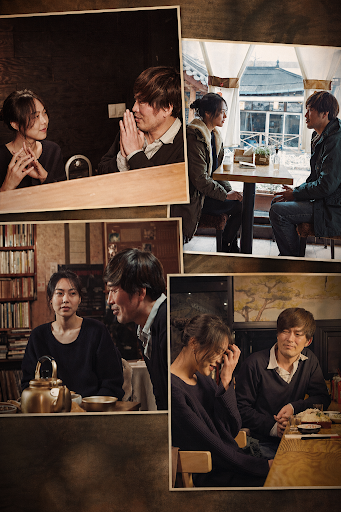
ImagesSources sample cineplaylist : Korean Film Biz Zone, Jeonwonsa Film
Korean filmmaker Hong Sang-soo explores subtle emotional shifts and missed connections through repeated scenarios. Dialogue is sparse but loaded with meaning.
Their connection feels alive because it is imperfect. Cheon-soo is charming, but not always truthful. Hee-jeong is curious, but also guarded. Between them, the film creates a delicate emotional dance: one person reaching forward, the other stepping back, both unsure whether the moment is sincere or only temporary.
Personally, this makes the film feel close to real life. Sometimes we do not ruin or save a relationship through big actions, but through small choices: a delayed confession, a softer tone, a more honest answer, a careless compliment, or one sentence spoken too late. The film follows Cheon-soo, a film director who arrives in Suwon for a screening, and Hee-jeong, a young painter he meets by chance. Their encounter is simple, but beneath its simplicity lives something deeply human: the desire to be seen, the fear of being exposed, and the small emotional risks people take when they begin to trust a stranger. Film Comment describes the movie as a work shaped by long takes and repeated situations, while Sarah Knows Nothing highlights its calm, conversational style and its fascination with tiny changes in behavior.
Hong Sang-soo’s Right Now, Wrong Then is a quiet film about the fragile beauty of meeting someone at the wrong—or perhaps right—moment. It does not depend on dramatic action or grand emotional speeches. Instead, it finds its power in ordinary human behavior: walking, talking, drinking, hesitating, smiling awkwardly, and saying things that may later feel either honest or mistaken. And also The cinematic images are modest, but they carry deep emotional weight. Hong often uses wide, static shots, allowing the characters to sit, drink, smoke, talk, and hesitate within the frame. This visual style gives the audience time to observe people as they slowly attract, resist, and misunderstand each other. The camera does not aggressively control our feelings. It simply watches, patiently and almost tenderly.
The zooms also become important. They are simple, but they feel like emotional attention. When the camera moves closer, it is as if the film is quietly whispering, “Look carefully—this small moment matters.” Sarah Knows Nothing points out that Hong’s zooms suggest something deeper than ordinary realism, as though a hidden emotional structure is moving beneath the surface of everyday life. Personally, Right Now, Wrong Then feels like a soft mirror held up to human connection. It reminds us that every conversation contains more than one possible future. We may become better or worse versions of ourselves depending on how honest we are, how gently we listen, and how bravely we admit the truth.
Subtext Techniques:
-
- Repetition on highlighting unspoken feelings.
- Camera positioning emphasizing personal distance or closeness.
- Minimalist interactions conveying inner thoughts.
3. The Shape of Water (2017)
Sutradara: Guillermo del Toro

ImagesSources sample cineplaylist : TSG Entertainment, Double Dare You Productions
; Distributed by Fox Searchlight Pictures
Guillermo del Toro’s romantic fantasy features a mute protagonist whose love story is told almost entirely through action, expression, and visual motifs.
The storytelling emotionally deep. Elisa cannot speak with words, yet she becomes the emotional center of the film. Her silence is not emptiness. It is full of rhythm, feeling, courage, and desire. Through her, the film reminds us that communication is not only about speaking. Sometimes love begins through small acts: sharing food, playing music, offering trust, or looking at someone without fear.
The villain, Strickland, represents a cold idea of power. He believes strength means control. Elisa proves the opposite: true strength can be gentle, patient, and brave. The film asks us to think about what makes someone human. Is it appearance? Speech? Authority? Or is it the ability to love, protect, and understand?
The romance between Elisa and the creature feels unusual, but the emotion behind it is very human. Both are treated as outsiders. Both are watched, judged, and controlled by others. In each other, they find a kind of freedom. Their love becomes a quiet rebellion against a world that wants everything to be normal, useful, and obedient.
What makes the film beautiful is not its strangeness, but its tenderness. Del Toro takes something that could feel frightening and turns it into something emotional, intimate, and almost sacred. The creature is not treated only as a monster, and Elisa is not treated only as a silent woman. Together, they become two lonely beings who understand each other in a world that often misunderstands differences. The Shape of Water is a film that feels like a love letter written in silence. It is not only a fantasy about a woman and a mysterious amphibious creature; it is also a gentle story about people who live outside the center of society, waiting for someone to truly see them. Directed by Guillermo del Toro, the film is set in Cold War-era America around 1962 and follows Elisa, a lonely cleaning woman in a hidden government laboratory, whose life changes after she discovers a secret experiment.
Elisa: “They call him a monster because he has no words.”
Giles: “And what do you call him?”
Elisa: “Someone who listened before the world ever did.”
The film’s images feel like they are floating underwater. Rooms are filled with green light, shadows, rain, glass, steam, and reflections. Everything seems touched by water, even before water appears. The visual world is soft but also dark, beautiful but also dangerous. The laboratory is cold and metallic, a place where life is measured and controlled. Elisa’s private world feels warmer, even when it is lonely.
Instead of a princess in a castle, we have a cleaning woman in a laboratory. Instead of a prince, we have a creature from water. Instead of a magical kingdom, we have Cold War America, full of fear, suspicion, racism, sexism, and control. This contrast makes the film powerful. It tells us that fairy tales do not only belong to children. Sometimes adults need them more, especially when the world feels cruel. The supporting characters also give the structure warmth. Zelda brings loyalty and humor. Giles brings loneliness and artistic tenderness. Dr. Hoffstetler brings moral conflict. Each character adds another layer to the film’s main idea: people who are ignored by the powerful may still carry the deepest humanity.
Personally, The Shape of Water feels like a poem about being seen. It understands that some people spend their lives being treated as incomplete, strange, or invisible. Elisa’s journey is moving because she does not ask the world to approve of her love. She simply follows what her heart already knows.
The film is romantic, but not in an ordinary way. Its romance is about recognition. Elisa and the creature do not love each other because they are perfect. They love each other because they are wounded, different, and alive. Their connection says something tender and powerful: love does not always arrive in a familiar shape.
Subtext Techniques:
-
- Visual storytelling through set design, color palette, and movement.
- Physical gestures expressing intimacy.
- Music cues enhance emotional resonance.
4. Her (2013)
Sutradara: Spike Jonze
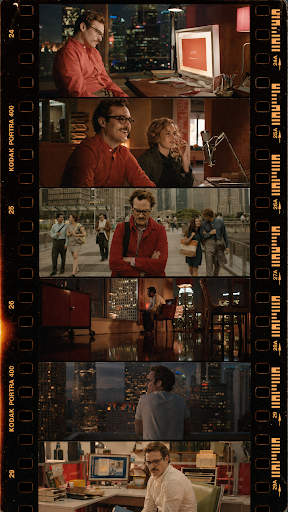
ImagesSources sample cineplaylist : Studio Annapurna Pictures ; Distributed by Warner Bros. Pictures, Kinorium
Spike Jonze presents a futuristic romance between a man and an AI. The story focuses on internal emotional evolution rather than excessive dialogue.
The emotional bond to audiences of Her comes from how honestly it understands contemporary loneliness that is emotive. Many viewers may not fall in love with an operating system, but they may recognize the feeling of reaching for a device when the heart feels empty. They may recognize the comfort of being answered instantly, the illusion of closeness, and the pain of needing connection in a world that often offers convenience instead. Theodore’s story touches audiences because it does not judge vulnerability. It reminds us that people are not weak for wanting to be heard. They are human. The film quietly asks us to think about our own relationships: Do we truly listen? Do we love another person as they are, or only as they make us feel? Do we use technology to connect, or to avoid the risk of real presence?
Personally, Her feels like a poem about the modern heart. It is romantic, but also sad. It is futuristic, but emotionally ancient. It understands that love is not only about bodies, proximity, or labels. Love is also about attention, imagination, timing, and the courage to be emotionally exposed.
This structure is powerful because it reverses the emotional expectation. We may think Theodore is the one learning how to love a machine, but in the end, he must learn how to let go of something he cannot possess. The film becomes not only a romance, but a meditation on impermanence. Some relationships arrive to heal us, but they are not always meant to stay.
At first, Samantha seems to exist mainly for Theodore’s comfort. She organizes his life, listens to his thoughts, and fills the emotional space left by his failed marriage. But as the story develops, Samantha also changes. She becomes more than Theodore’s fantasy. She grows beyond him, beyond human limitation, and beyond the simple role of lover. The structure of Her moves like a relationship itself. It begins with emptiness, grows into emotional discovery, becomes romantic, turns complicated, and finally reaches a quiet form of acceptance. The film does not rush Theodore’s transformation. It allows him to move slowly through grief, desire, confusion, and maturity.
Spike Jonze’s Her is not simply a film about a man who falls in love with artificial intelligence. It is a soft, melancholic portrait of modern loneliness, where technology becomes both a comfort and a mirror. The story follows Theodore Twombly, a professional letter writer living in a near-future world where digital systems have quietly entered the most intimate corners of human life. After the emotional collapse of his marriage, Theodore meets Samantha, an intelligent operating system whose voice slowly becomes his companion, his confession room, and eventually, his lover.
Visually, Her is beautiful because its future does not look cold or metallic. It is soft, pastel, warm, and strangely comforting. The city is bright but lonely. The apartments are clean but emotionally empty. The colors feel gentle, yet beneath them there is a quiet ache. The film imagines the future not as a machine world, but as a beautifully designed place where people can still feel deeply alone.
The music also strengthens the emotional atmosphere. The film’s score, associated with Arcade Fire and Owen Pallett, is often described as intimate and melancholic, helping the romance feel both fragile and dreamlike. Its visual design and warm futuristic palette make the film pleasing to the eye without making the world feel unrealistic
Subtext Techniques:
-
- Use of voiceover to reflect inner thoughts rather than conversations.
- Cinematography emphasizes isolation and connection simultaneously.
- Pauses and subtle reactions convey depth of feeling.
5. Eternal Sunshine of the Spotless Mind (2004)
Sutradara: Michael Gondry
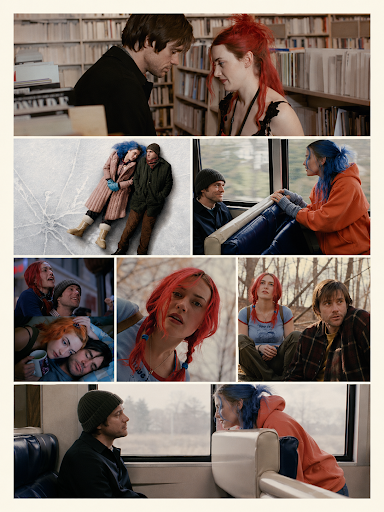
ImagesSources sample cineplaylist : Anonymous Content and This Is That Productions, and presented by Focus Features, film independent org
Michel Gondry uses fragmented narrative and visual metaphors to convey love and memory. Dialogue is minimal in some emotional sequences, letting the power of imagery tell the story.
Joel: “I thought forgetting you would save me.”
Clementine: “Did it?”
Joel: “No. It only taught me that pain was the last place love was still alive.”
But instead of saying, “Forget and be free,” the film gently argues the opposite. It suggests that our painful memories are part of our emotional identity. emphasizes that the film treats romantic failure as an essential part of love, not simply something to escape. That is why the film remains moving. It does not promise that love will last forever. It promises something more honest: even failed love can shape us, teach us, and leave beauty behind. Joel’s life struggle is the struggle of many people after heartbreak. He wants peace, but he also wants proof that the love mattered. He wants to stop hurting, but he does not truly want to become untouched by the past. His journey teaches us that pain is not always the enemy. Sometimes pain is the evidence that something real happened.
Joel’s greatest struggle is not only losing Clementine. His real struggle is learning how to feel without hiding. He is a man who often lives inwardly, quietly, almost invisibly. He loves deeply but does not always know how to express it. His heartbreak pushes him toward erasure because forgetting seems easier than facing the emotional mess of love.
But inside the procedure, Joel becomes more alive than he was in waking life. He runs, hides, pleads, and protects his memories. This is the tragedy and beauty of his character: only when love is being taken away does he fully understand how much he wanted to keep it.
Eternal Sunshine of the Spotless Mind feels like a poem written inside a broken heart. It is romantic, but not naïve. It is sad, but not hopeless. It understands that love is not only made from perfect days. Love is also made from arguments, silence, disappointment, fear, and the stubborn little memories that refuse to die. The film’s beauty lies in its honesty. Joel and Clementine are not ideal lovers. They are flawed, incompatible in many ways, and sometimes careless with each other. Yet their connection still feels meaningful because the film does not confuse imperfection with failure. It shows that even a painful relationship can contain moments worth protecting.
In the end, Eternal Sunshine of the Spotless Mind is not simply about erasing memory. It is about the courage to remember. It tells us that a spotless mind may sound peaceful, but a life without emotional scars may also be a life without depth. Love hurts because it enters us. Memory hurts because it proves we were changed. And sometimes, even after everything is broken, the heart still whispers: remember.
The cinematic images feel like dreams disappearing while we are still inside them. Memories collapse, faces blur, rooms lose their shape, and places that once felt familiar begin to melt into darkness. The film does not show memory as something neat or organized. It shows memory as emotional architecture: a house built from kisses, arguments, jokes, regrets, and unfinished goodbyes.
Clementine’s hair becomes one of the film’s most poetic visual symbols. Its changing colors feel like emotional seasons. Each color belongs to a different moment in love: beginning, warmth, distance, damage, and return. Joel does not only remember her face; he remembers the feeling of her presence, the energy she brought into his silent world. Instead of moving forward in a normal timeline, the story moves through Joel’s memories as they are being erased. This broken structure mirrors the way the heart remembers: not in order, but in flashes.
Joel wants Clementine gone. He wants peace. He wants silence. But as the worst memories disappear and the tender ones begin to vanish, he starts fighting to keep her. This reversal gives the film its emotional power. The same person he wanted to forget becomes the person he desperately wants to save inside his mind.
The film connects strongly with audiences because almost everyone understands the temptation to forget. We all have memories that still hurt. We all have names, places, songs, or conversations that can suddenly reopen an old feeling. Eternal Sunshine of the Spotless Mind understands this pain without mocking it.
Its emotional bond comes from its honesty. The film does not say that love always lasts. It does not promise that two damaged people will magically become perfect
Subtext Techniques:
-
- Dreamlike sequences conveying emotional states.
- Body language and facial expressions carry complex emotions.
- Non-linear storytelling reflecting psychological and emotional depth.
Key Takeaways for Filmmakers and Content Creators
- Show, Don’t Tell: Visual cues, expressions, and gestures often communicate more than words.
- Use Sound and Silence: Ambient sound, music, and deliberate silences enhance subtext and emotions.
- Cinematography Matters: Framing, shot composition, and camera movement reinforce emotional subtext.
- Minimalism in Dialogue: Reduces exposition and invites audiences to interpret emotions themselves.
- Symbolism and Metaphors: Objects, colors, and recurring motifs can reflect internal states and relationships.
Conclusion
Romance films with minimal dialogue demonstrate the power of subtext, visual storytelling, and emotional nuance. By relying on gestures, cinematography, and subtle cues, these films evoke profound emotional responses from audiences.
For filmmakers and creators, understanding how to communicate love and connection without words is an essential skill, proving that sometimes silence speaks louder than dialogue.