
(Written by: Andy Raditya Satyatikta & Filbert Nathaniel M.)
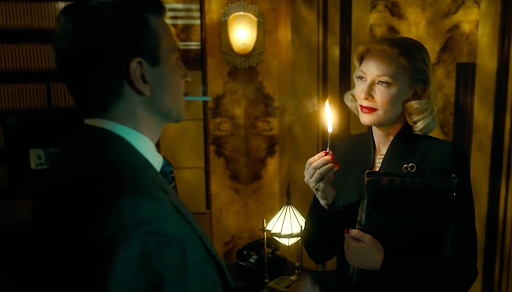
In filmmaking, few elements are as powerful and as underestimated as lighting. The camera may be the tool that captures the image, but it is light that shapes what the audience sees, feels, and remembers. Proper lighting preparation is not simply a technical step; it is the foundation of cinematic realism and the emotional resonance of a scene. Without a thoughtful approach to lighting, even the best-written script, the most talented cast, and the most advanced cameras, the images will fall flat.
This article will dive deep into why lighting preparation is essential, how it contributes to cinematic realism, and what techniques cinematographers use to prepare lighting that establishes mood, tone, and visual storytelling.
Why Lighting Preparation Matters
1. The Language of Cinema
Film is a visual medium, and light is its grammar. Lighting determines how textures appear, how faces are perceived, how colors come alive, and how space feels. When lighting is properly set, the audience does not consciously notice it. Instead, they absorb the story, feel the emotions, and believe in the world presented to them.
2. Saving Time on Set
Proper lighting preparation during pre-production ensures that the shooting day runs smoothly. A cinematographer who has already planned the light placement, intensity, and modifiers can avoid wasting precious hours experimenting while the cast and crew waited. Preparation saves money, time, and energy.
3. Enabling Creative Freedom
When lighting is pre-planned, filmmakers can focus more on performances, blocking, and camera movement. The crew is not distracted by technical delays, and the director can experiment creatively knowing that the foundation of the scene’s look is already set.
The Role of Lighting in Cinematic Realism
Cinematic realism is not about replicating reality to the maximum, but about creating a world that feels authentic enough for the audience to believe in. Lighting preparation is crucial for this illusion.
- Motivated Lighting
Every light source in a scene should appear to come from a logical source: a window, a lamp, the sun, or a streetlight. Preparing lighting means planning these “motivations” in advance so the audience accepts the environment as real. - Color Temperature
Realistic lighting requires consistency with how different light sources behave. Daylight (around 5600K) feels cool, while tungsten lamps (around 3200K) feel warm. Pre-visualizing how these temperatures interact on set prevents a scene from feeling artificial. - Natural Shadows and Contrast
Life is not evenly lit. Shadows, gradients, and areas of darkness contribute to realism. Preparation ensures that shadows fall where they should, and that contrast levels support believability instead of looking staged. - Dynamic Environments
Realistic scenes often require changes in lighting across time: a sunset fading to night, a candle flickering, or headlights sweeping across a room. These must be prepared carefully, both technically and narratively, to maintain immersion.
Lighting Preparation as a Tool for Mood
Beyond realism, lighting preparation sets the mood of a scene. A romantic dinner, a horror sequence, a courtroom drama, and a war battle may all use similar equipment, but the way lighting is prepared will dictate how the audience feels.
1. Emotional Color Palettes
- Warm tones (orange, amber, gold) evoke comfort, intimacy, nostalgia.
- Cool tones (blue, teal, cyan) suggest loneliness, melancholy, detachment.
- High contrast lighting creates tension, fear, or mystery.
- Soft light conveys safety and gentleness.
Cinematographers often prepare by using color mood boards or referencing artworks that reflect the intended emotion.
2. Direction of Light
Where the light comes from drastically affects mood:
- Side lighting highlights conflict or ambiguity.
- Top lighting conveys power, oppression, or religious symbolism.
- Backlighting creates mystery or a heroic silhouette.
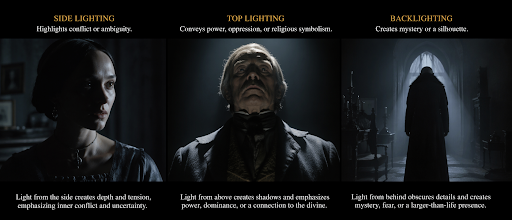
By preparing the direction of light, cinematographers can sculpt not only how a character looks but also how they are emotionally perceived.
3. Consistency Across Scenes
A carefully prepared lighting design ensures continuity. For instance, if a thriller used high-contrast shadows to build suspense, this should be consistent throughout the film. Without preparation, the mood risks becoming incoherent.
Steps for Proper Lighting Preparation
1. Script Breakdown
The cinematographer begins by analyzing the script for key lighting cues. Does the story take place mostly at night? Are there emotional turning points where light needs to shift dramatically? This early analysis lays the groundwork for all later decisions.
2. Location Scouting
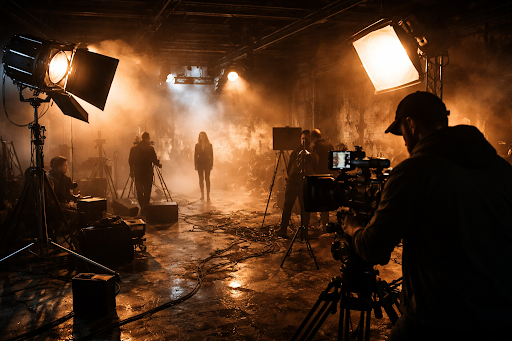
Every location is studied for natural light, architectural features, and power availability. A room with large windows might inspire naturalistic daylight scenes, while a warehouse with no natural sources may require extensive artificial lighting setups.
3. Pre-visualization
This involves sketches, diagrams, and digital tools (such as Cine Designer or Previs software) to map out lighting plans. Cinematographers may create lighting schematics showing where lamps, flags, and reflectors will be placed.
4. Camera Tests
Lighting interacts with cameras differently depending on sensor, lens, and exposure settings. Camera tests during pre-production help determine how light will translate on screen.
5. Mood References
Cinematographers often prepare “lookbooks” with paintings, photographs, or film stills that represent the intended atmosphere. These references guide not just lighting but also for production design team and costume choices.
Common Techniques in Lighting Preparation
- Three-Point Lighting Adaptations
While the classic key-fill-back setup is foundational, preparation often involves modifying it for narrative effect. For realism, the “key” might be a window; for mood, the fill might be intentionally removed to create deeper shadows. - Use of Practical Lights
Lamps, candles, or neon signs that appear in the frame are often integrated into the lighting design. During preparation, cinematographers plan how these practicals will be enhanced or replaced by hidden film lights. - Day-for-Night and Night-for-Day Planning
Preparing how to simulate night during the day, or vice versa, requires filters, gels, and exposure planning. Without prior preparation, such scenes can look artificial. - Rigging and Safety Considerations
Large productions often require extensive rigging (lights on cranes, ceilings, or dolly rigs). Proper preparation ensures safety and efficiency, avoiding delays on shooting days.
Case Studies
Roma (2018, Alfonso Cuarón)
The film used extensive pre-production lighting tests to mimic natural Mexican sunlight. Preparation allowed the cinematographer to capture a hyper-realistic yet emotionally rich atmosphere.
Blade Runner 2049 (2017, Roger Deakins)
Lighting preparation involved designing entire sets with built-in LED panels to achieve futuristic yet immersive environments. The colors were carefully planned to evoke loneliness and grandeur simultaneously.
Moonlight (2016, James Laxton)
Through prepared color palettes and naturalistic practical lights, the cinematographer created intimacy and vulnerability, amplifying the film’s emotional weight.
The Balance Between Realism and Expression
Preparation is not about eliminating spontaneity. In fact, it creates the space for it. When lighting setups are carefully pre-planned, filmmakers can confidently improvise on set. For example, if an actor decides to move differently than rehearsed, a prepared lighting plan can quickly adapt without breaking the mood or realism.
Conclusion
Proper lighting preparation is not just a technical necessity—it is the invisible backbone of cinematic storytelling. It ensures realism by grounding the film in a believable world and enhances mood by sculpting emotion with light. From script breakdown to camera tests, from color palettes to practical sources, every step of preparation shapes how the audience experiences the story.
When filmmakers invest in lighting preparation, they unlock the true cinematic potential of their film. Realism feels effortless, mood resonates deeply, and every frame becomes a visual extension of the story.
Mood is not an accident—it’s designed through light. If you’re ready to elevate your visuals and create something truly cinematic, Heroes Pictures is ready to make it happen. Let’s roll.