
(Written by: Andy Raditya Satyatikta & Filbert Nathaniel M)
In filmmaking, chaos can easily creep into production if preparation is not done properly. The director may have a clear vision, the cinematographer may have the tools to achieve it, and the crew may have the skills to bring it to life. Yet, without a carefully structured shot list, the production can lose valuable time, create confusion, and even miss essential shots that are crucial for storytelling.
A shot list is more than a checklist of camera angles. It is a strategic tool that bridges the director’s vision with the practical workflow of the crew. When properly organized, a shot list keeps production efficient, reduces stress, and ensures that no narrative detail is overlooked.
Let’s explore the best ways to organize a shot list that truly works on set, diving into its purpose, structure, categories, and practical tips from industry professionals.
Why a Shot List Is Essential
1. It Translates Vision into Action
The director may imagine a scene in vivid detail, but unless those ideas are translated into practical shots, they remain abstract. A shot list breaks down creative vision into specific, actionable camera instructions.
2. It Saves Time and Money
On set, every minute counts. Wasted time equals wasted budget. With an organized shot list, the crew knows what to prepare next, reducing downtime and avoiding unnecessary setup changes.
3. It Creates a Shared Language
The shot list is a common reference for everyone: the director, cinematographer, assistant director, script supervisor, and even the art department. When all departments operate from the same plan, collaboration becomes smoother.
4. It Ensures Coverage
Filmmaking is unpredictable. Actors may improvise, weather may change, and technical problems may arise. A comprehensive shot list ensures that, even if conditions shift, the essentials of storytelling are still captured.
Key Elements
An effective shot list typically includes the following details:
- Scene Number and Description – to align with the script breakdown.
- Shot Number – to keep track of each unique setup.
- Camera Angle – wide shot, close-up, over-the-shoulder, etc.
- Lens Choice and Focal Length – critical for the look of the shot.
- Movement – dolly, handheld, crane, static, or Steadicam.
- Location and Time of Day – for lighting and scheduling accuracy.
- Notes – including blocking, dialogue emphasis, or emotional tone.
Without these details, a shot list can feel vague and leave too much room for misinterpretation.
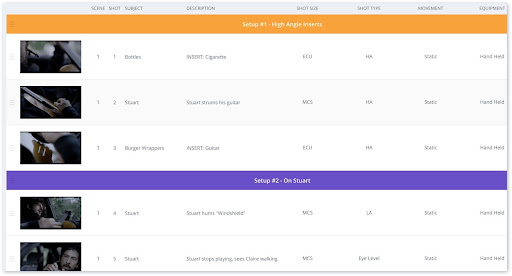
Sample Images Shotlist
Organizing by Priority
Not all shots carry the same weight. A crucial close-up of an actor’s emotional breakdown is far more important than a secondary cutaway of a clock on the wall. Organizing by priority ensures that if time runs out, the most important shots are already secured.
- Essential Story Shots
These are non-negotiable. Without them, the scene cannot function. They include master shots, key dialogue exchanges, and major action beats. - Supporting Shots
These shots enhance storytelling but are not critical. Examples include reaction shots, inserts, or secondary angles. - Optional Creative Shots
These are experimental shots that add visual flair. They may not be necessary, but if time permits, they can elevate the final product.
By categorizing in this way, the assistant director and cinematographer can prioritize production flow without losing sight of the director’s creative ambitions.
Grouping by Camera Setup
On set, the most time-consuming part of shooting is often changing setups, not capturing footage. Moving the camera, adjusting lights, and resetting blocking take significant effort. A smart shot list minimizes unnecessary changes by grouping shots according to setup.
- All wide shots in one block
- All close-ups from a given angle together
- All reverse shots done consecutively
This approach saves hours and reduces fatigue for both cast and crew.
The Role of Storyboards and Pre-Vis
While a shot list is text-based, it often works hand in hand with storyboards or pre-visualization (Pre-Vis). Storyboards offer a visual reference, helping the crew understand framing and composition. Pre-Vis adds another layer by simulating movement, effects, and timing.
Integrating these into the shot list makes it easier for everyone to see the intended flow of the scene, ensuring fewer misunderstandings on set.
Digital Tools for Shot List Organization
The days of handwritten lists are fading. Today, filmmakers rely on digital tools that make shot list creation more dynamic and shareable. Some of the most popular tools include:
- StudioBinder – intuitive for breaking down by scene, setup, and time.
- Shot Lister – allows real-time adjustments on set.
- Celtx – integrates script breakdown with shot planning.
- Google Sheets/Excel – simple and easy to access, yet highly customizable for any workflow.
These platforms allow instant updates, so when conditions change on set (such as moving indoors due to rain), the list can be reorganized on the spot.
Balancing Creativity and Practicality
A shot list is not meant to be a rigid cage. It is a flexible guide that balances creativity with logistics.
- Leave Room for Improvisation
Sometimes the best shots emerge unexpectedly—a unique shadow, a natural breeze, or an actor’s spontaneous gesture. The shot list should account for flexibility rather than locking everyone into a strict checklist. - Collaborate with the Crew
While the director may lead the creative process, input from the cinematographer, assistant director, and production designer can refine the shot list. Collaboration ensures that creative ambition aligns with practical feasibility. - Adapt to the Production Scale
A student film may need a simple shot list, while a Hollywood blockbuster may require detailed pre-visualization with multiple units. The level of organization must fit the scale of the project.
The Assistant Director’s Role
The 1st Assistant Director (AD) often becomes the keeper of the shot list on set. Their job is to manage the schedule, coordinate with all departments, and ensure shots are completed on time. A poorly organized list puts unnecessary pressure on the AD, while a clear and prioritized one empowers them to keep the production efficient.
Practical Tips for Organizing a Shot List
- Number Shots Sequentially – to avoid confusion when discussing them on set.
- Use Color Coding – to separate essentials, supporting shots, and optional ones.
- Include Estimated Time – knowing how long each setup might take helps the AD manage the schedule.
- Print and Digital Versions – keep backups in case of technical issues.
- Check Continuity – ensure that costume, props, and lighting align between shots.
- Rehearse with Actors – sometimes rehearsals reveal better blocking that requires list adjustments.
Common Mistakes to Avoid
- Overloading the List: Adding every possible shot can overwhelm the crew and cause delays.
- Ignoring Transitions: Failing to note how shots connect can make editing difficult later.
- Forgetting Coverage: Relying only on one perfect angle may leave gaps in post-production.
- Not Updating During Production: A static list that ignores on-set changes quickly becomes useless.
Conclusion
An organized shot list is not just a logistical tool—it is a bridge between imagination and execution. It ensures that the director’s vision is translated into concrete, achievable steps while keeping the production efficient and collaborative.
The best way to organize a shot list is to combine structure with flexibility: prioritize essential shots, group by setup, integrate visual aids, and adapt in real time. When done well, a shot list becomes the invisible force that keeps the set running smoothly and the story alive on screen.
A shot list isn’t just a checklist—it’s a shared roadmap for every department on set. When everyone moves with clarity, creativity flows better. Let’s collaborate and bring your vision to life, perfectly planned frame by frame.